
![Iconic Classic Breaks of DNB and Jungle - Remastered & Fortified [Free Download]](http://kansamples.com/cdn/shop/articles/Free_subscriber_packs_graphics_3375aed2-5486-4785-a165-d7f6988989b6_700x700_crop_center.png?v=1754579571)

Sound design for drum and bass and dubstep is the craft of building bass patches, drum hits, textures and atmospheres from scratch using synthesis and processed audio. The four synthesis types that matter are subtractive, wavetable, FM and granular. The reese, the neuro growl and the dubstep wobble each come from a specific recipe of oscillator, filter, envelope and modulation choices. Know the frequency spectrum, layer cleanly, and resample early.
Sound design for drum and bass and dubstep is the skill that separates producers who sound like everyone else from those who have an identity. It is the craft of building sounds from the ground up - shaping oscillators, filters, envelopes and modulators into something that cuts through a mix, carries weight, and belongs unmistakably to a specific genre.
For drum and bass, dubstep and neurofunk producers, sound design is not optional. These are genres defined by their sounds. The reese, the growl, the halftime wobble, the rolling Amen chop - these are the sonic vocabulary of the culture. Understanding how those sounds are built gives you the tools to recreate them, evolve them, and eventually create your own.
This hub article covers the foundations. Each section links to a dedicated deep-dive where you can go further on that specific topic.
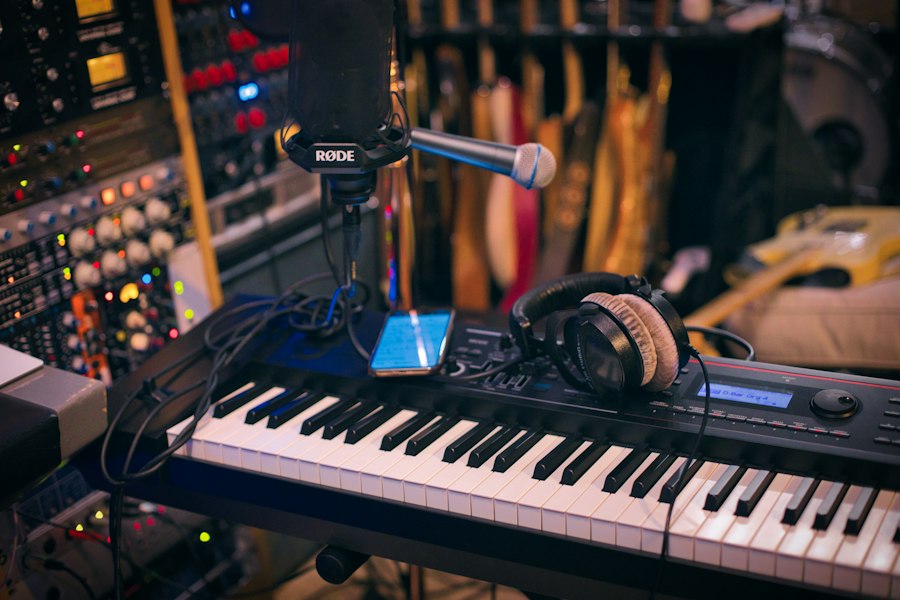
Hardware or software, every synthesiser shares the same architecture: oscillators generate tone, filters shape it, envelopes control how it evolves over time.
Before you can design sounds with confidence, you need to understand the tools available. There are four synthesis methods that appear constantly in DnB and dubstep production, each with its own character and best use cases.
▸ Synthesis types - what they are and where they shineSubtractive
Start with a harmonically rich waveform and carve away frequencies using filters. The most common synthesis type in electronic music - the foundation of most bass patches, leads and pads. Excellent for reese basses, supersaw chords and dark atmospheres.
Wavetable
Uses tables of single-cycle waveforms that can be scanned through for evolving, morphing timbres. The basis of modern neuro and dubstep sound design - scanning the wavetable is what creates that characteristic growling, transforming quality in bass sounds.
FM (Frequency Modulation)
One oscillator (modulator) controls the pitch of another (carrier) at audio rate, creating complex harmonic sidebands. FM produces metallic, bell-like and aggressive timbres that are difficult to achieve any other way - essential for technical DnB and industrial dubstep tones.
Granular
Slices audio into tiny grains and reassembles them with pitch and time manipulation. Creates textures, atmospheres and alien timbres from any source material. Increasingly common in neurofunk for designing evolving pad layers and abstract sound beds.

Sound design is inseparable from frequency awareness. Every sound you design occupies space in the frequency spectrum, and knowing where each element sits determines how your sounds layer together, how they translate on a club system, and how they survive the mixing process.
▸ The frequency spectrum - key regions for DnB and dubstep producersIn drum and bass and dubstep, the low end is everything. The relationship between sub bass, mid bass and kick drum in the 20–200 Hz range determines whether your track sounds powerful on a club system or thin and undefined. Every sound design decision should be informed by where that sound sits in this spectrum and what it has to coexist with.

Treating the frequency spectrum as a finite resource is the mental shift that turns drag-and-drop habits into deliberate sound design.
Whatever synthesiser you use and whatever sound you are designing, these are the parameters and concepts you will encounter constantly. Understanding them fluently is what makes the difference between twisting knobs and hoping for the best, and understanding exactly what each control is doing to your sound.
▸ Key synthesis parameters - tap each to expandTone source. Generates the raw waveform - the starting material for your sound. Common shapes include sine, sawtooth, square and triangle, each with a different harmonic character.
In DnB and dubstep, detuned sawtooth oscillators are the building block of the reese bass. Sine waves form the clean sub layer underneath most bass sounds, providing weight without harmonic clutter.
Frequency shaping. Removes or emphasises frequency content. A low-pass filter cuts everything above the cutoff frequency. A high-pass filter cuts everything below. A bandpass filter isolates a specific frequency region.
Automated filter cutoff is what creates the wobble and movement in dubstep bass patches. Filter resonance - which boosts the frequencies around the cutoff point - adds the characteristic growl peak heard in neurofunk sounds.
Time shaping. Attack, Decay, Sustain, Release. Controls how a parameter - usually amplitude or filter cutoff - evolves from the moment a note is triggered to the moment it ends.
Short amp attack settings keep bass transients punchy and upfront. Long filter decays create falling, plucked tones. Release time is critical for sub bass - too long and it clashes with the next kick drum hit.
Modulation. Low Frequency Oscillator - a repeating shape (sine, square, sawtooth, etc.) that modulates a target parameter at a sub-audio rate, creating cyclical movement and animation in a sound.
LFO routed to filter cutoff creates a wobble bass. LFO to pitch creates vibrato. LFO to wavetable position creates an evolving, morphing growl. The LFO is the primary tool for adding life and movement to bass design across all underground electronic genres.
Harmonic content. Adds harmonic overtones by clipping or reshaping the waveform. Moves energy from the fundamental frequency up into the harmonic series, making a sound brighter, richer and more aggressive.
Essential for neurofunk. A clean sub bass put through distortion or waveshaping pushes harmonic content up into the midrange where it becomes the audible growl, bite and aggression that defines the genre. Without it, neuro sounds would have no teeth.
Width and thickness. Stacks multiple copies of a voice, each slightly detuned from the others. The beating frequency between the detuned copies creates a thick, wide, chorusing quality.
The defining technique of the reese bass. Two or more detuned sawtooth oscillators beating against each other at slightly different rates is precisely what creates that characteristic movement and breathing quality - the sound that has defined DnB bass since the early 1990s.
Wavetable-specific. The wavetable is a series of single-cycle waveforms stored in sequence. The position control determines which waveform is being played at any given moment, and therefore the harmonic character of the sound.
Automating or LFO-modulating wavetable position is the core technique of modern neuro bass design. Scanning through a wavetable in real time creates the transforming, morphing timbres heard across current DnB and dubstep production - it is the engine behind most contemporary growl sounds.

Each genre within the underground electronic spectrum has its own sonic vocabulary. Understanding where these sounds come from - technically and culturally - gives you the context to design them authentically and push them forward.
DnB bass design ranges from the classic detuned reese - built from stacked sawtooth oscillators running through a filtered, distorted signal path - to the complex, morphing neuro bass sounds that define modern technical DnB. Neurofunk in particular is defined by its bass: aggressive, harmonically rich, constantly evolving mid-bass patches that sit alongside a deep sub layer. These are almost exclusively wavetable or FM-based sounds driven through saturation and distortion chains.
The drums in DnB are equally important. Whether you are working with chopped Amen breaks, programmed beats or layered one-shots, the sound of the drums - the crack of the snare, the transient shape of the kick, the presence of the hi-hats - defines the energy and authenticity of the track.

Every genre in the underground spectrum sits on a recipe - once you can hear the recipe, you can rewrite it.
Dubstep sound design centres on the wobble bass - an LFO-modulated low-pass filter sweeping rhythmically against a bass waveform, locked to the halftime groove of the track. Beyond the classic wobble, modern dubstep incorporates heavy distortion, pitch modulation, vocal-style formant filtering and complex multi-layered bass patches that change character every few bars. The drop in a dubstep track is a sound design showcase.
Most sound design problems trace back to the same handful of habits. Watch out for these as you build patches.

Sound design is not exclusively synthesis. Many of the most distinctive sounds in underground electronic music come from the creative processing of samples - treating recorded audio as raw material to be transformed rather than just triggered.
Resampling a processed synth patch, layering a sampled transient over a synthesised sub, running a vocal through a vocoder to create a formant bass - these are all sound design techniques. Knowing how to flip and process samples opens up a dimension of texture and organic quality that pure synthesis often struggles to match.

This guide covers the foundations. Each article below takes one specific topic from this pillar and goes deep - with step-by-step techniques, plugin-specific guidance, and audio examples relevant to DnB, dubstep and neurofunk production.
▸ Sound design deep-dive articlesSubtractive, wavetable, FM and granular - a full breakdown of each method with practical examples for electronic music producers.
How to design a reese bass from scratch →
Step-by-step guide to building the iconic DnB detuned bass sound from first principles.
How to design neuro bass and growl sounds for neurofunk →
Wavetable scanning, distortion chains and the techniques behind modern technical DnB bass.
Designing sub bass for UK dubstep →
LFO routing, filter automation and layering techniques for wobble, growl and movement in dubstep bass patches.
How to synthesise and process kicks, snares and percussion that hit hard and translate on any system.
Using samples as sound design tools →
How to treat samples as raw material rather than finished sounds, and transform them into something original.
LFOs, envelopes and routing - adding life, animation and evolution to your patches.
Sound design does not exist in isolation. Once you are designing sounds with intention, the next step is understanding how they behave in a mix, how they sit alongside other elements, and how to finish a track to a professional standard.
KAN Samples packs give you professionally designed source material - one-shots, loops and textures built for DnB, dubstep and neurofunk producers who design sounds rather than drag and drop.
Browse KAN Sample Packs →
At KAN Samples, our mission is to preserve the rich history of Drum & Bass while helping producers shape its future.
Through free resources, classic break restorations, and professional-grade sample packs, we aim to empower artists at every level with tools that inspire creativity and respect the roots of the genre.
![Funky Drummer Break Tribute Pack – Free DNB Sample Pack [Free Download]](http://kansamples.com/cdn/shop/articles/x_KAN_Funky_Drummer_Break_Tribute_x_9bd9a390-4896-4bf1-8708-e88dab0e6107_700x700_crop_center.png?v=1750070302)
![Cold Sweat Break Tribute Pack – Free DNB Sample Pack [Free Download]](http://kansamples.com/cdn/shop/articles/x_KAN_Cold_Sweat_Break_Tribute_x_94de1306-6c26-45b0-b947-723e6568784b_700x700_crop_center.png?v=1750070338)